Resiliency Software: Safeguarding the Built Environment

In today’s volatile environment, industrials no longer have the luxury of moving slowly. From HVAC and roofing to permitting, procurement, and construction services, sectors that once waited for disruption are now being forced to plan for it. And as system failures become more frequent and severe, a new customer is emerging for climate software: the built environment.
In particular, the construction sector is undergoing a quiet transformation. Contractors and material suppliers are facing relentless margin pressure, driven by rising interest rates and a 30%+ increase in key material costs since 20201. At the same time, weather volatility and aging infrastructure are accelerating demand for retrofits and repairs. In the roofing market alone, approximately 80% of demand is now for replacements2, driven by storm damage, aging stock, and insurance-fueled reroofing cycles.
This backdrop is driving a new appetite for digitization. Where once spreadsheets and paper directories sufficed, today’s contractors, suppliers, and infrastructure providers are looking for software that can help them operate proactively to forecast risks, manage supply disruptions, enable community response, and navigate surge demand with limited labor.
In short, resilience is becoming a software category. And companies that recognize this shift are positioning themselves not only as tools for disaster response, but as essential platforms for day-to-day operations in high-friction, high-stakes industries.
The Growing Need for Resiliency
While weather remains a key driver, the forces shaping industrial resiliency demand extend far beyond climate. We’re seeing the convergence of six structural tailwinds that are transforming how organizations operate:
- Aging infrastructure and equipment, such as HVAC systems, are reaching end-of-life across residential and commercial sectors.
- Labor shortages, particularly for skilled trades, are limiting response capabilities in moments of crisis.
- Consolidation among material and labor companies is changing go-to-market strategies and procurement behaviors.
- Community expectations are rising: people expect fast, transparent, and coordinated responses to disruptions.
- Grid stress and power volatility are forcing enterprises to reevaluate energy resiliency strategies.
- Digital transformation and AI are commoditizing basic workflows, shifting the advantage to companies with proprietary data and insights.
These pressures are driving a new imperative: enabling faster, smarter, and more proactive systems to detect, communicate, and resolve disruption before it spirals into crisis.
The Role of Software
Software companies are now critical infrastructure for resiliency efforts. The best platforms are moving industries from reactive to proactive—helping organizations not just survive emergencies but operate better in the day-to-day.
Here’s how we’re seeing that play out across key sectors:
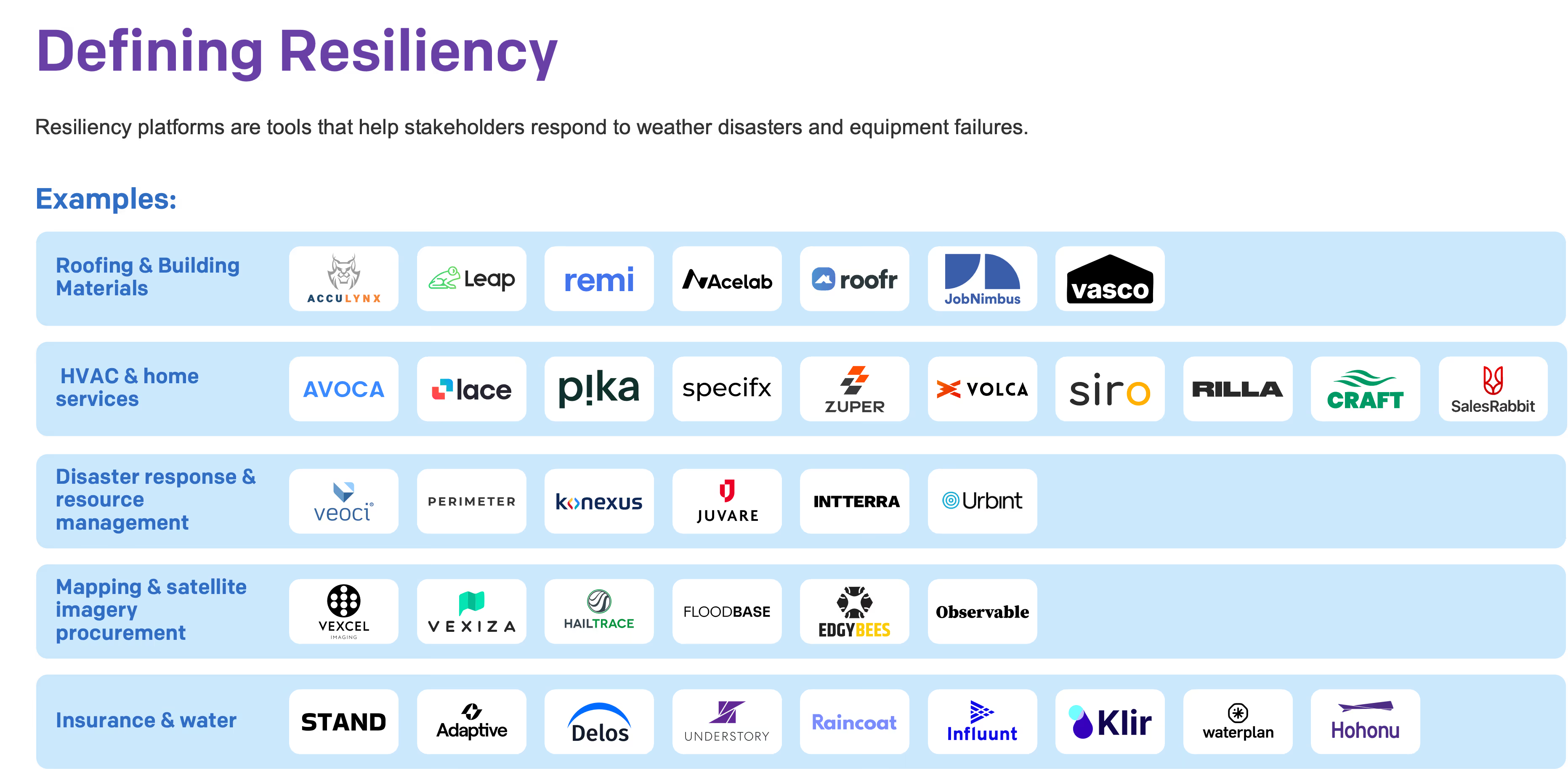
HVAC & Home Services
Demand surges in extreme weather are overwhelming local contractors. AI-powered scheduling, predictive maintenance, and parts procurement tools are helping service providers stay ahead of breakdowns and spread capacity across peak periods.
Roofing & Building Materials
With 80% of U.S. roofing demand tied to replacements (not new builds), platforms that digitize inspections, material selection, and permitting are creating systems of record in a highly fragmented market. Players that start with workflow CRM are evolving into full platforms.
Mapping & Satellite Imagery Procurement
Satellite imagery and GIS tools are speeding up inspection, insurance assessments, and disaster zone analysis. Platforms like Felt and DroneDeploy have become vital to everything from wildfire risk mitigation to storm damage response.
Disaster Response & Resource Management
Coordination challenges often compound physical damage during crises. Software platforms that digitize permitting, inspection routing, labor mobilization, and equipment tracking can significantly reduce response time and cost. These tools help agencies and enterprises develop centralized, flexible systems, which then reduces confusion and speeds recovery.
Insurance and Water
Both industries are seeing increasing disruption and rising expectations. In insurance, parametric platforms are accelerating claims by tying payouts to real-time weather and asset data. Meanwhile, water utilities are adopting monitoring and compliance tools to detect leaks, optimize maintenance, and meet tightening regulatory standards. In both cases, software creates transparency, reduces administrative overhead, and improves resilience against unpredictable inputs.
Beyond Crisis: Becoming an Enduring Partner
To be indispensable during high-demand periods, software companies must also be useful in the quiet ones.
The most successful resiliency platforms move beyond crisis response to continuous operations. They stay relevant between storms and across procurement cycles by embedding deeply into workflows and evolving as trusted partners to the customer.
Here are five strategies we’re seeing companies use to build staying power in the resiliency stack:
- Extend use cases beyond disasters. Digitizing processes like permitting, inspections, or compliance provides value in both “normal” and disrupted conditions.
- Build proprietary data moats. With workflow tools increasingly commoditized by AI, competitive advantage now lies in access to specialized data—like digitized manuals, asset histories, or SKU libraries.
- Enable proactive behavior. This includes forecasting asset failure, optimizing capital planning, and improving sales enablement through insights into regional risk and installed asset base.
- Fit into consolidation. Many trades are consolidating rapidly. Winning platforms become the system of record for acquirers, offering a central pane of glass across labor and material networks.
- Serve community infrastructure. After disruptions, community-based marketplaces and services become critical. Software that helps people help each other, while maintaining trust, safety, and accountability, can unlock new categories of growth.
At Energize, we’ve seen this shift firsthand. Companies that once relied on “hair-on-fire” crisis sales are evolving toward repeatable, product-led revenue, serving customers on good days and bad to achieve staying power.
Final Thought: Resiliency is a Business Strategy
In a world shaped by volatility, resiliency tools are moving beyond safeguards to economic imperatives. We’re proud to back founders who not only help communities survive their most difficult moments, but also come back stronger, more efficient, and more connected.
If you're building software that helps others endure, we’d love to hear from you. Reach out to me via LinkedIn at https://www.linkedin.com/in/marktomasovic/.
1) Bureau of Labor Statistics
2) IBIS World: Roofing Contractors in the US - Market Research Report (2015-2030)




Let’s Build What’s Next